Setting up a Proper Lighting
System for Your Sundews Updated- NOW WITH PICTURES! :)
If you are unable to grow your sundews outdoors year-round, the easiest and cheapest method for giving them sufficient light is by using 4-foot fluorescent lights (1 fixture costs $9 at Wal-Mart or Lowes). By no means am I an expert, but I've experimented enough to understand what works and what doesn’t. 2-foot fluorescent fixtures/ lights work fine if you don't have enough room, but both the fixtures and bulbs typically cost the same as (and sometimes more than) 4-foot fixtures/lights. You can buy a box of 12 T-8 bulbs for around $20 at Lowes or Menards, (which can last you about 8+ years if you have only 1 fixture).
First off, a very helpful tip for giving your plants a constant amount of light is by setting up your lights on a timer. You can buy a timer for only a few bucks at most convenience or hardware stores (pic below). It will save you a lot of time and frustration with having to turn the lights on yourself- and many times, forgetting to do so. With a timer, you can also synchronize your lights with the natural photoperiod outdoors. Now to the important stuff...


Above left: Timer image borrowed from here. Above right: Any typical fluorescent bulb should work (preferably a mix of warm and cool), which can be found at many convenience stores, like Lowes or Wal-Mart. The warm bulbsusually have orange packaging rather than the blue cool bulb packaging- borrowed from Horticulture Source's site
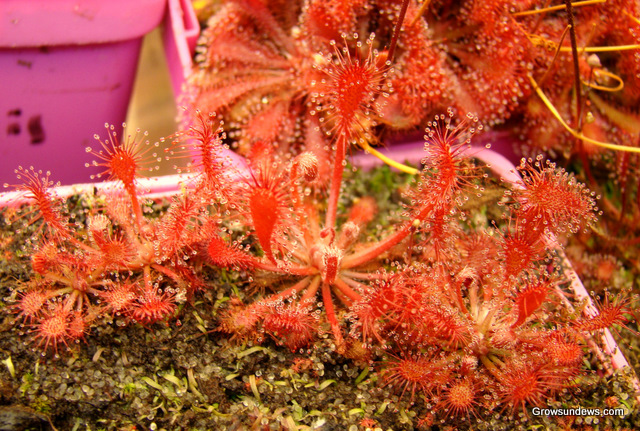
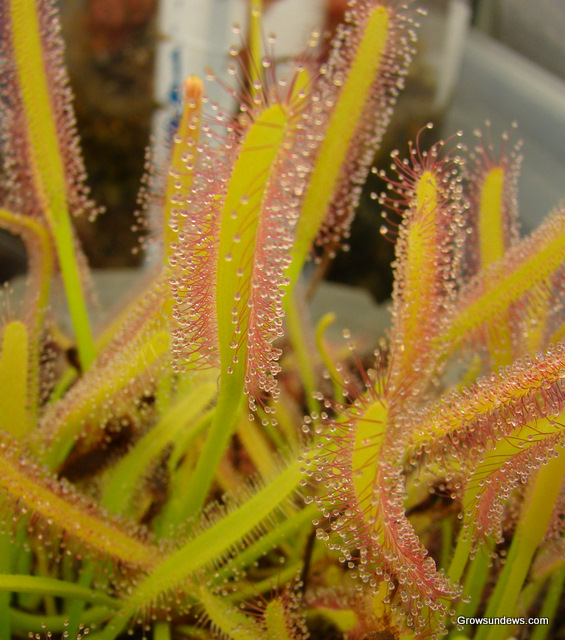
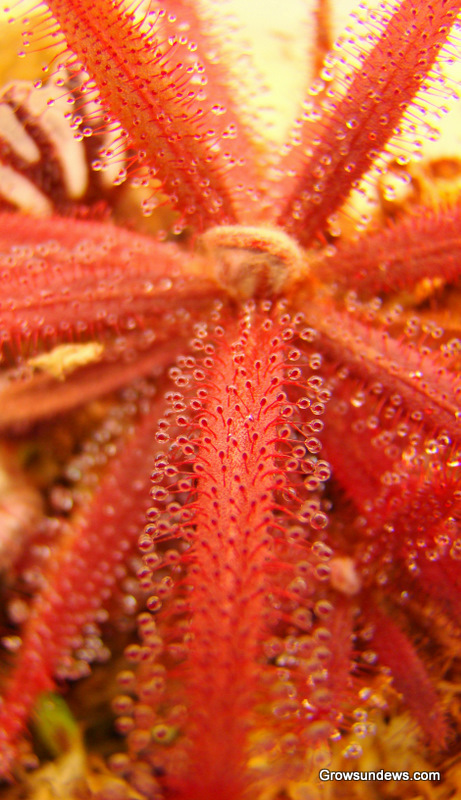
Originally, I bought 6 4-foot T-12 fixtures. They use 48 watts per bulb, so I decided to purchase the more energy efficient T-8 fixtures, which are only 32 watts per bulb. Even though T-8s have less wattage, I was able to get more light intensity from 4 T-8 fixtures than I was getting with 6 T-12 fixtures, suprisingly. This cut my lighting bill in half (I'm saving around $150 every year). Plus, my plants have never looked better. They color up very well under these lights:
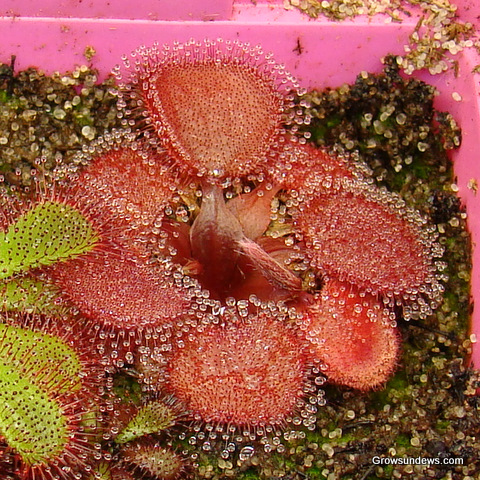
 Drosera falconeri
Drosera
oblanceolata (Sunset Peak, HK)
Drosera falconeri
Drosera
oblanceolata (Sunset Peak, HK)
It seems you can never give sundews enough light
(except for a select few listed below). The key to getting maximum
coloration out of
your sundews is by moving the bulbs as close to the plants as you
can,
without allowing the heat given off by the fixture to do harm to the
leaves. When using T-12s, I actually let the
leaves touch the bulbs and they didn’t burn. But, if you're concerned,
you can have the bulbs 6+ inches above your sundews, and most should
still turn bright red if not fed. However, it takes sundews much longer
to develop this coloration when further away from the lights.
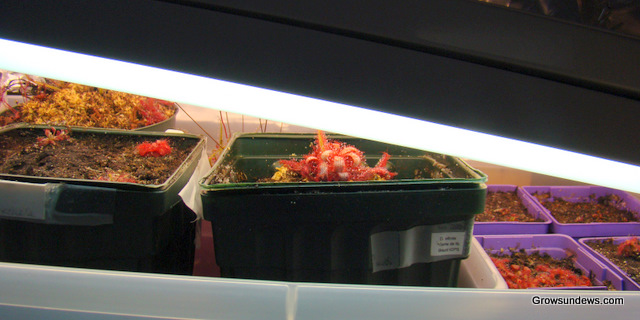
The picture below shows a D. graomogolensis growing within 3 inches of a T-12 fixture:
The key to building up light intensity is to hang multiple fixtures next to each other (see pics below). I don't have very much space, so I only have enough room to put two 4-foot fixtures side-by-side. If you can get 3 or 4 lamps together in an area, you will be able to put your lights much further away from your plants and still get rich coloration. Not only does this method build light intensity, but it is a great method for raising temperatures high enough to give the plants a nice drop in temperature when the lights turn off. Most sundews seem to love temperature drops, since the night temperature differential is usually critical for stimulating growth.
The lights are raised for the above pictures- they're normally kept much closer than this.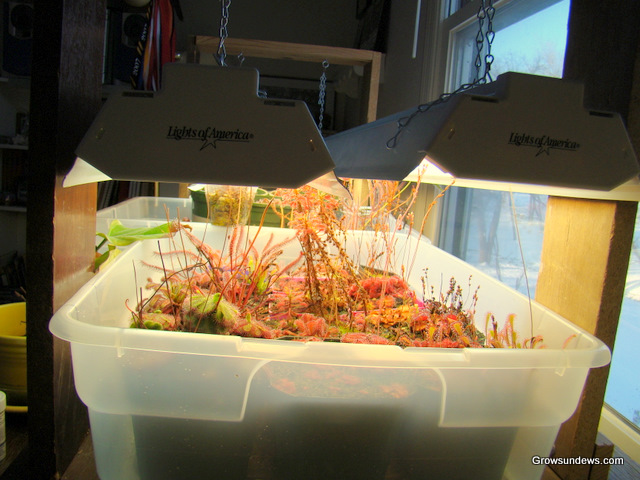
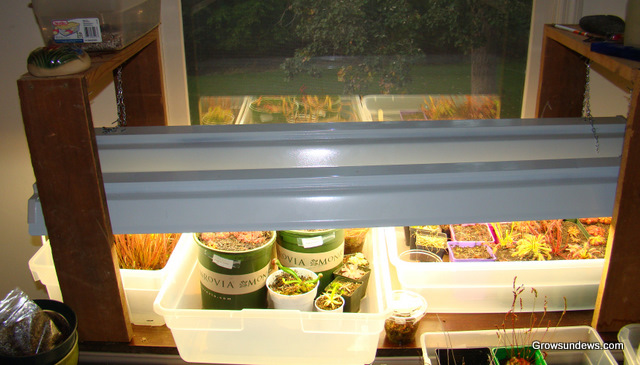
Another way to maximize light intensity is to surround your growing area with mirrors or tin foil. Mylar costs a bit more than foil, but it is an excellent reflective material if you have a little extra cash to spare. I am notorious for my frugality, so I just pretend that foil works just as well. If you want to use reflective materials, remember to leave a side open for air circulation. If you plan to seal the entire growing area off with reflective material, you should place a fan inside to improve circulation.
Setting up a good lighting system is the foundation for growing beautiful sundews. You will also keep plant casualties to a minimum. I've found that you can change many variables (besides watering) and the sundews will thrive AS LONG AS LIGHTING INTENSITY IS HIGH ENOUGH. Examples of things you can change are pot sizes and media mixtures. I cannot stress the importance of a setup like this enough! I've seen not only new, but experienced growers with etiolated plants that are being starved (not from insects, but) from light. Light allows sundews to produce sugars and other foods necessary for healthy growth.
I have no experience with other forms of plant lighting, such as halogen lights, etc. Most of these other lighting systems will be effective, but can end up costing you a fortune in energy costs. T-5 fixtures are best for light intensity, but they are very pricey. I'd recommend this if you had only a small space to grow your plants, or if you have a very deep terrarium that isn't large enough to fit multiple 4-foot fixtures over it. If you only want to light one or 2 plants and the window you have has very dim light, then I've seen some growers buy the small fluorescent bulbs that you can use in place of typical incandescent lights. This will provide a little extra light so that your plants won't get etiolated
I hope this article helped you learn a few things. If you only get one thing out of this, just know that if your sundew is green, you need to give it more light!!!
Exceptions:
D. schizandra does better in much less light compared to most sundews. D. capensis ‘Albino’ can tolerate somewhat less light and still look decent (BUT tentacles will turn
pink in strong light and it is much healthier in brighter conditions, as well).
D. adelae and D. prolifera can tolerate lower light, but can look like this under bright lighting:
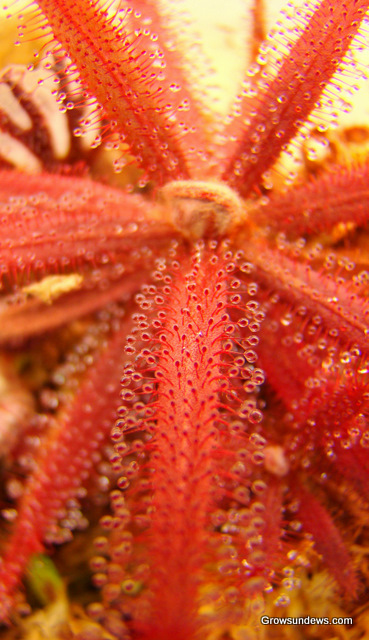
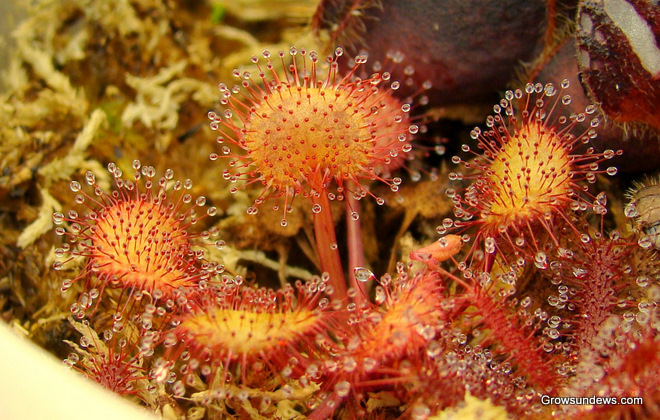
Drosera adelae under bright light Drosera prolifera coloring up
I don’t know of any others at this time, but will add to this list if I find out.
Additional Questions or Suggestions?
Contact me at: sundewman(at)yahoo.com