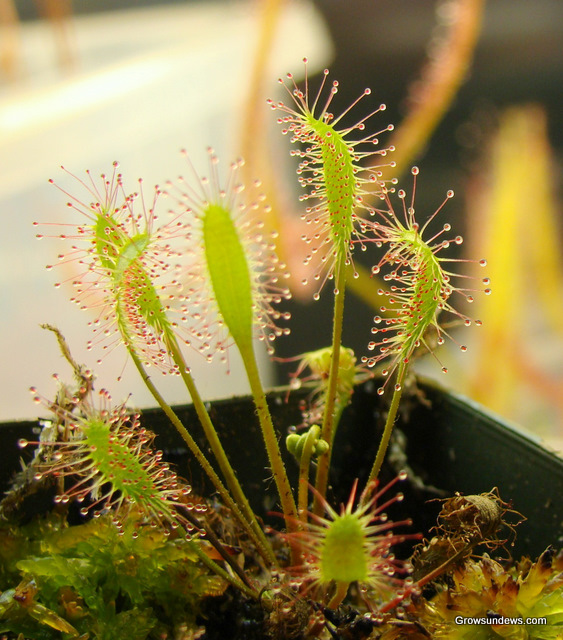
Drosera anglica (tropical forms)There are only a few tropical forms of Drosera anglica in cultivation including the Alaka'i Swamp and Kanaele Bog locations from Kaua'i, Hawaii, as well as a hybrid created by Ivan Snyder written as D. anglica "CA x HI". The "CA x HI" hybrid was created by crossing a larger Californian form of D. anglica with a very weak dormancy requirement and the tropical form of D. anglica from Alaka'i Swamp in Hawaii. The result is a considerably larger tropical form that is a bit more robust than the Hawaiian forms . The tropical forms of D. anglica are very easy to grow as long as you give them plenty of food, enough moisture, and enough light. Note that the Kanaele Bog location form has a tendency to remain quite small unless fed regularly. For habitat info, refer to the lower portion of this page. |
|
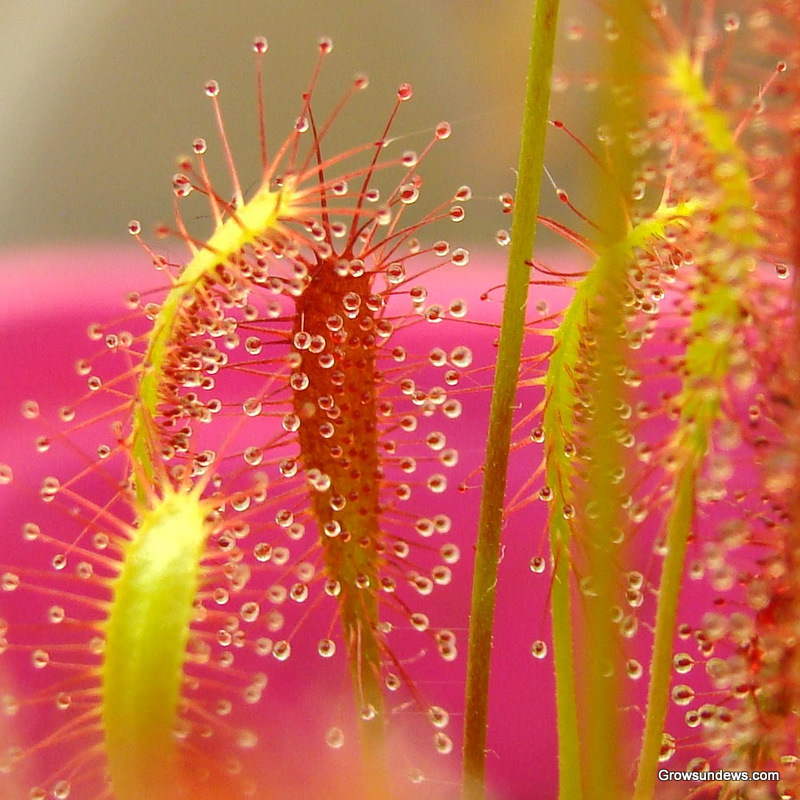
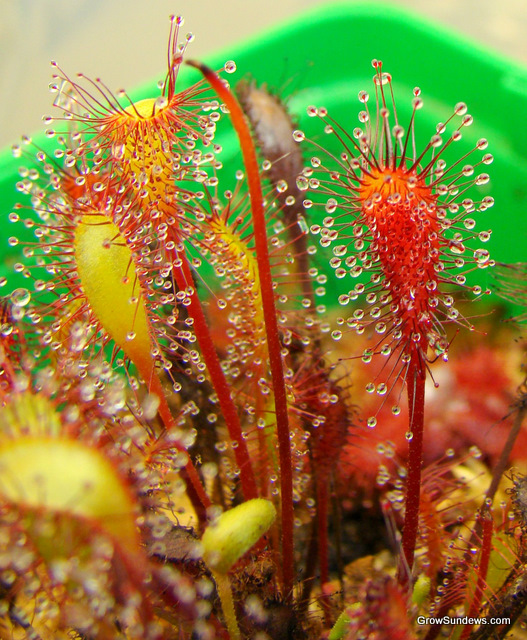 Above: Drosera anglica "California x Hawaii" 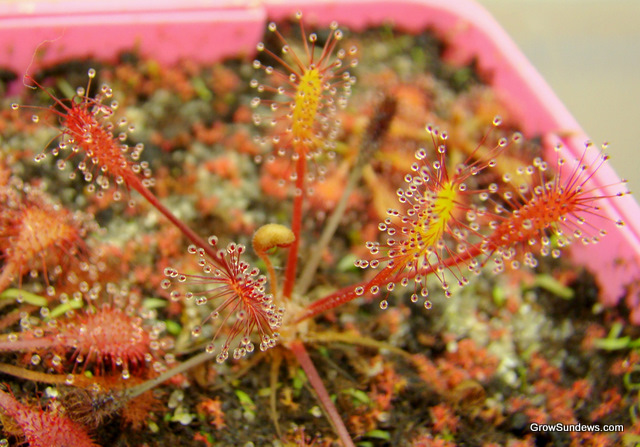 Drosera anglica (Kanaele Bog, Kauai, HI)
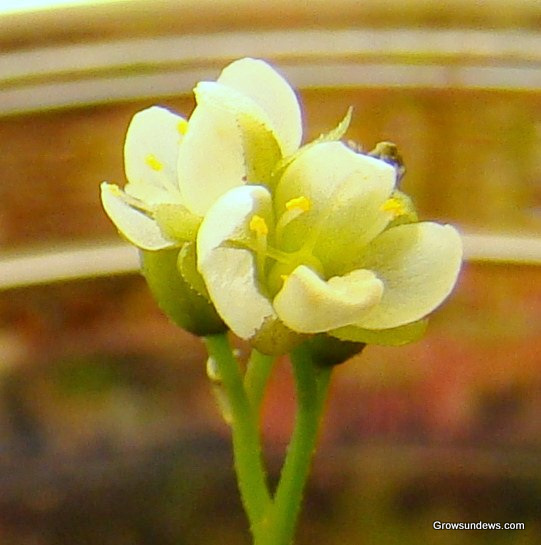 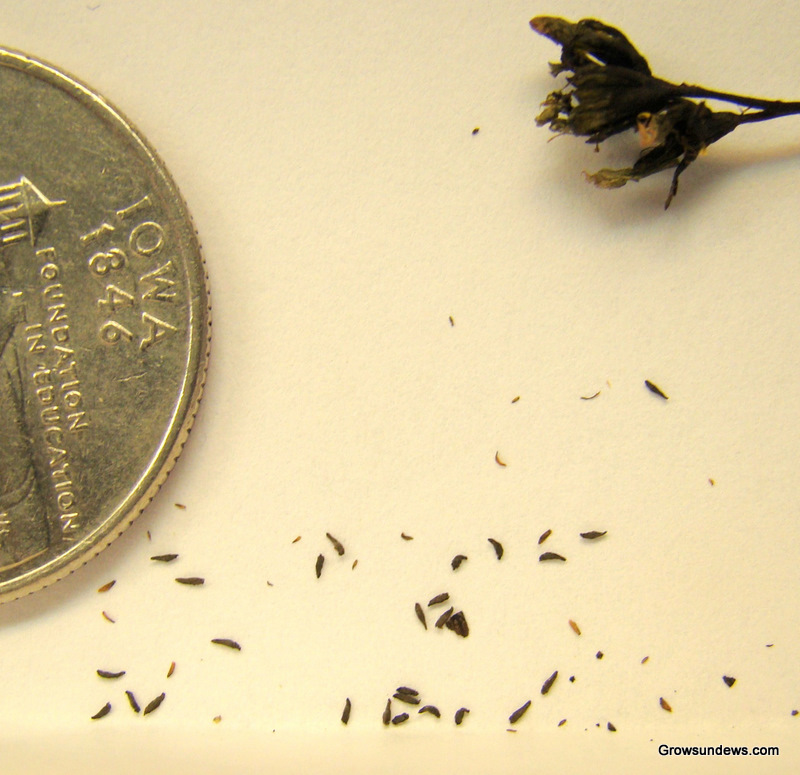
Drosera anglica (Kanaele Bog, Kauai, HI) 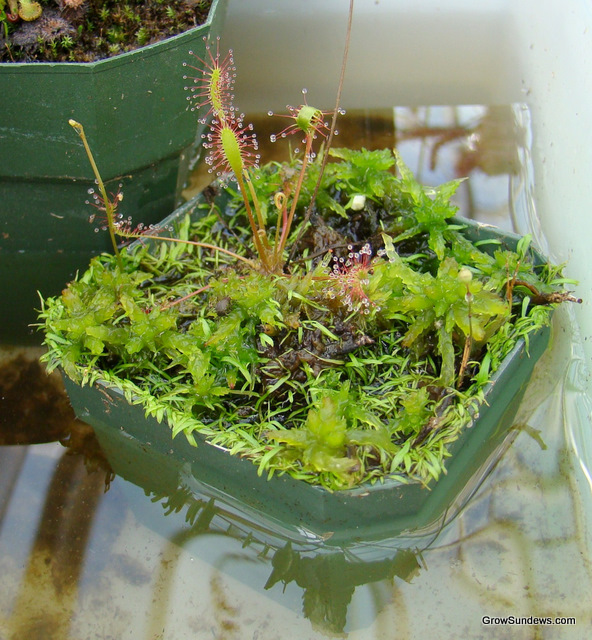 |
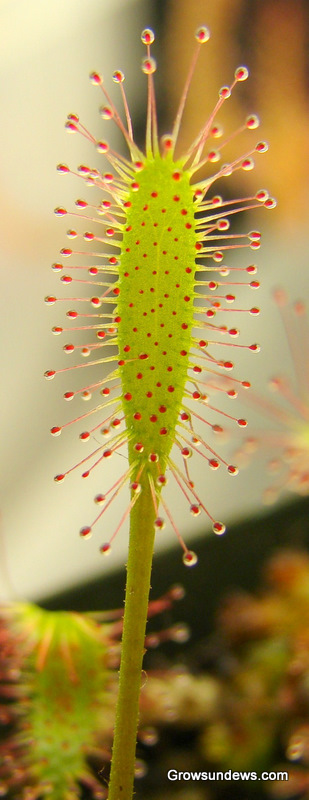
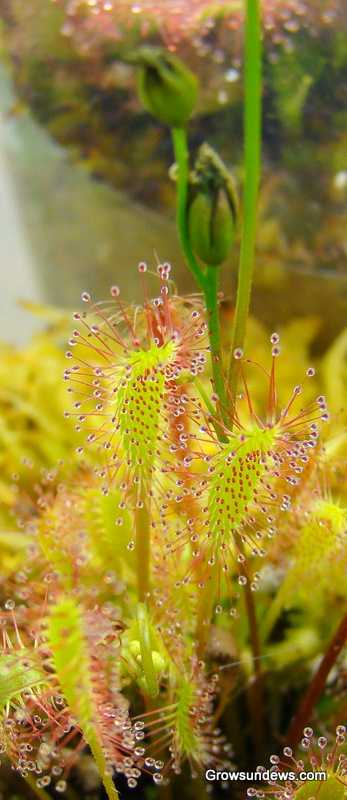
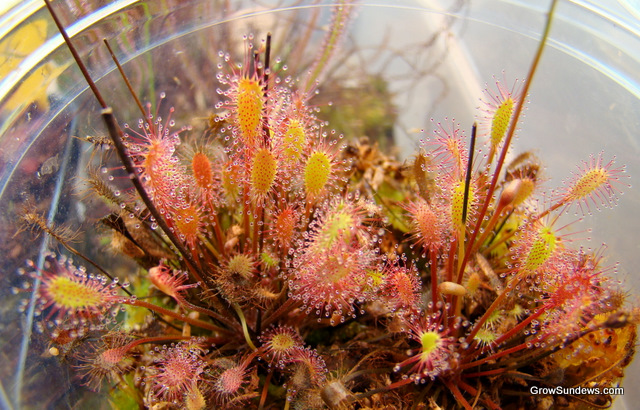
Media: a mix of 1 peat: 1 sand: 2 live sphagnum moss is my favorite mix. This keeps the plant healthy and allows the live sphagnum to thrive. Another good mix is 2 peat: 2 dead LFS: 1 sand. Not picky. See habitat info below for the natural media components. Media moisture: very moist to waterlogged. In habitat, this species grows in locations "in which the water table is almost immediately below the surface" (Slack 128). See the picture towards the bottom of this page and habitat info below for pictures of water levels. Humidity: very little needed for tray method, as long as there is little or no air movement. Pot height: can be grown in small 2-3" pots or taller 4+ inch pots as long as the water level is kept sufficiently high. Trapping speed: average. Noticeable movement within a couple hours Feeding: VITAL to growth. If not fed, will grow very slowly and will produce very few flowers. See feeding page. Food size: small to tiny to avoid mold. Plant dimensions: tropical forms of D. anglica are generally smaller than the temperate forms. Large specimens can reach 2-3 inches high. Usually not stem-forming. Temperature: See habitat info below for the natural temperature. Keep above 60 degrees to be safe. If subjected to low enough temps for an extended time, dormancy could be encouraged. Can handle temps above 90F. Lighting/Photoperiod: Give as much light as possible. Tentacles and leaves will become bright pink or red in bright light (see picture at the bottom left). Dormancy requirements: no dormancy required. Can be grown year-round indoors (or oudoors in warm enough climates). Flowers: will flower when very young from seed, if fed. If you feed them a lot, they will produce an abundance of large seeds. Flowers are small and white (see pic to the left). Propagation Techniquesfor detailed instructions, visit the sundew propagation page. Seed: easy. no cold stratification required. Leaf-cuttings: work very well. Make sure to feed the plantlets after they sprout in order to rapidly speed up growth. Follow the guidelines on this page. Root cuttings: should work well, but I’ve never tried it… Roots are fairly small, so try using the largest roots possible. Flower stalk cuttings: are probably too small to use this technique with. I haven't tried this yet, though. Divisions: will clump a lot in a short time. Are not picky, as long as you are careful. Left: D. anglica (Kanaele Bog, HI) growing in a 2-inch pot with a high water level. It is growing in a mix of 1 peat: 1 sand and the spagnum moss spontaneously grew on its own. |
Habitat Information
Visit the Nature Concervancy's page about the Kanaele Bog preserve.The Kaua'i average temperature is fairly steady all year-round, ranging from 78-85 degrees F (26-29 C) in the day and 65-74 degrees F (18-23 C) at night, depending on the season. "Most bogs in Hawai`i contain mud, small pockets of standing water, and tussocks formed from grasses and sedges (Carlquist 1970)" Source. This mud is basically comparable to waterlogged peat. Even though "Sphagnum moss is only found in bogs on the Kohala bogs on the island of Hawai`i," tropical Drosera anglica still grow well in sphagnum moss. Source
Habitat Photos- used with permisson from radmegan
References: Slack, Adrian. Carnivorous Plants. Cambridge: The MIT Press, 2000.
Additional Questions or Suggestions?
Contact me at: sundewman(at)yahoo.com